
HRA staff recommends reserving 2026 federal tax credit for Aragon affordable housing project
Summary
HRA staff recommended reserving the agency’s projected 2026 low-income housing tax credit allocation of $1,140,454 for the Aragon development after scoring three applications; no formal vote was taken and the reservation will be considered at a future meeting.
The Saint Paul Housing and Redevelopment Authority received a staff recommendation Wednesday to reserve the HRA’s projected 2026 low-income housing tax credit allocation of $1,140,454 for the Aragon development in Ward 7.
Director Jules Antagno, presenting the staff report, said the federal low-income housing tax credit program—created by Congress in 1986—remains the main source of equity for many affordable housing projects and that staff’s recommended allocation for Aragon “translates into roughly $8,000,000 of equity,” while cautioning that that is an estimate and the final figure could change.
The recommendation grew out of a competitive RFP process: staff published the notice on June 12, 2025, with a July 24 deadline and received three applications. The Aragon proposal (a new-construction, 53-unit project from Beacon Interfaith) received 83 points in the HRA scoring; Highland Bridge Phase 3 (a 59-unit new-construction proposal from PPL) received 80 points; and a rehabilitation proposal for Ramsey Hill (by Trellis) scored 65 points. Antagno said the difference in scores hinged largely on the HRA’s equity and cultural-integration criterion, which Beacon claimed and documented but which Highland Bridge’s application did not claim.
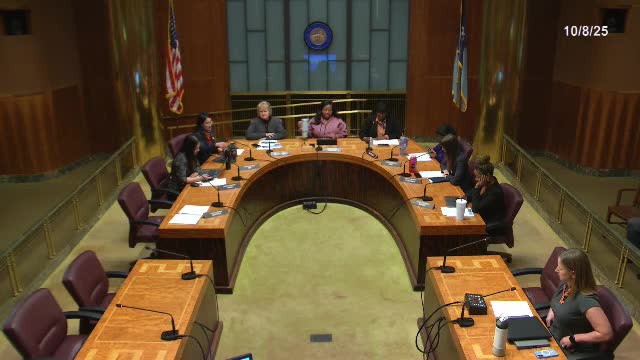
When Commissioners asked about how the equity and cultural-integration points are awarded, Antagno described the amended scoring criteria and staff review process. She said Beacon had hired an equity consultant, conducted tenant outreach and a survey, and adjusted unit design in response to tenant input—steps staff counted in the scoring. Commissioner Booth asked specifically about the equity factor; Antagno explained that applicants self-score and a staff committee reviews and scores applications, comparing staff scores to applicant self-scores.
Several commissioners voiced support for awarding credits to projects that serve larger families and neighborhoods with high needs. Commissioners also asked procedural questions about timing and next steps; the item before the HRA on Wednesday was a staff report only and no formal reservation or vote took place. Antagno confirmed the board will take action on the reservation at a future meeting and that staff would notify applicants of the next steps.
The staff recommendation, scoring details and the RFP timeline were the most substantive matters discussed; commissioners emphasized the importance of prioritizing projects that align with program goals and community needs.

Create a free account
Unlock AI insights & topic search